Hard Dough Bread Recipe
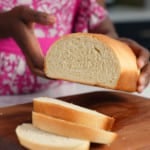
Jamaican hardough bread is dense, slightly sweet, with a tight, chewy crumb. A Caribbean bakery classic from simple pantry ingredients.
Servings 8 people
Calories 221kcal
Equipment
Ingredients
- 3 cups bread flour 420 grams
- 1 ⅛ cup warm water this equals 1 cup + 2 tablespoons of water
- 1 packet instant yeast 2 ¼ teaspoons or 7 grams
- 2 tablespoons granulated sugar
- 2 teaspoons salt
- 3 tablespoons unsalted butter divided
Instructions
- In a large mixing bowl, combine the bread flour, granulated sugar, salt, and instant yeast. Add the 2 tablespoons of softened unsalted butter. Use a wooden spoon to work the butter directly into the dry flour mixture, stirring and pressing it against the sides of the bowl until it breaks down into small, even bits and the flour looks slightly clumpy.
- Pour in the water and stir with your wooden spoon until a shaggy dough forms and no dry patches of flour remain. The dough will still look shaggy and unformed before it goes into the mixer.
- To Use a Stand Mixer: Transfer the shaggy dough to a mixer bowl fitted with a dough hook. Mix on low speed for 6 to 8 minutes until the dough pulls away from the sides and forms a smooth, cohesive ball that holds its shape cleanly. To Knead by Hand: Turn the shaggy dough out onto a lightly floured surface and knead vigorously for 8 to 10 minutes until it forms a smooth, elastic ball that is supple and offers resistance when pressed.
- Shape the dough into a smooth ball and place it in a lightly oiled bowl, turning once to coat. Cover and let rise at warm room temperature until close to doubled in size, about 1 to 1 ½ hours. Gently deflate the risen dough and turn it back out onto a lightly floured surface.
- Using a rolling pin or your hands, pat and roll the dough into a neat rectangle. To get that classic, tight, hard dough crumb, roll the dough up as tightly as possible from the long side into a snug, dense log. Pinch the long seam and both ends firmly closed to keep the shape taut.
- Place the log seam-side down in a greased 9x5-inch loaf pan. Cover lightly and let rise a second time, about 45 to 75 minutes, until the dough fills out the pan, rises just to or slightly below the rim, and springs back slowly when gently pressed.
- Preheat your oven to 350°F (175°C). Bake the loaf for 30 to 35 minutes until pale golden and the loaf sounds hollow when tapped on the bottom. If the top browns too quickly, tent it loosely with aluminum foil. Bread should reach an internal temperature of 190°F to 200°F (88°C to 93°C).
- Remove the loaf from the pan immediately and place it on a wire cooling rack. While piping hot, brush the top and sides generously with the remaining 1 tablespoon of butter. Let the bread cool completely before slicing so the dense crumb sets properly.
Video
Notes
- If using all-purpose flour instead of bread flour, use a little less water to start, since all-purpose flour absorbs less liquid. The loaf will bake up softer and lighter, with a less chewy, less traditional hard dough texture, but it will still be delicious.
- Store the cooled, sliced loaf in an airtight bag at room temperature for 3-4 days. For longer storage, wrap the slices tightly and freeze them for up to 3 months; they can be pulled straight from the freezer and popped into the toaster.
Nutrition
Calories: 221kcal | Carbohydrates: 37g | Protein: 6g | Fat: 5g | Saturated Fat: 3g | Polyunsaturated Fat: 1g | Monounsaturated Fat: 1g | Trans Fat: 0.2g | Cholesterol: 11mg | Sodium: 585mg | Potassium: 57mg | Fiber: 1g | Sugar: 3g | Vitamin A: 132IU | Vitamin C: 0.003mg | Calcium: 10mg | Iron: 0.4mg
