

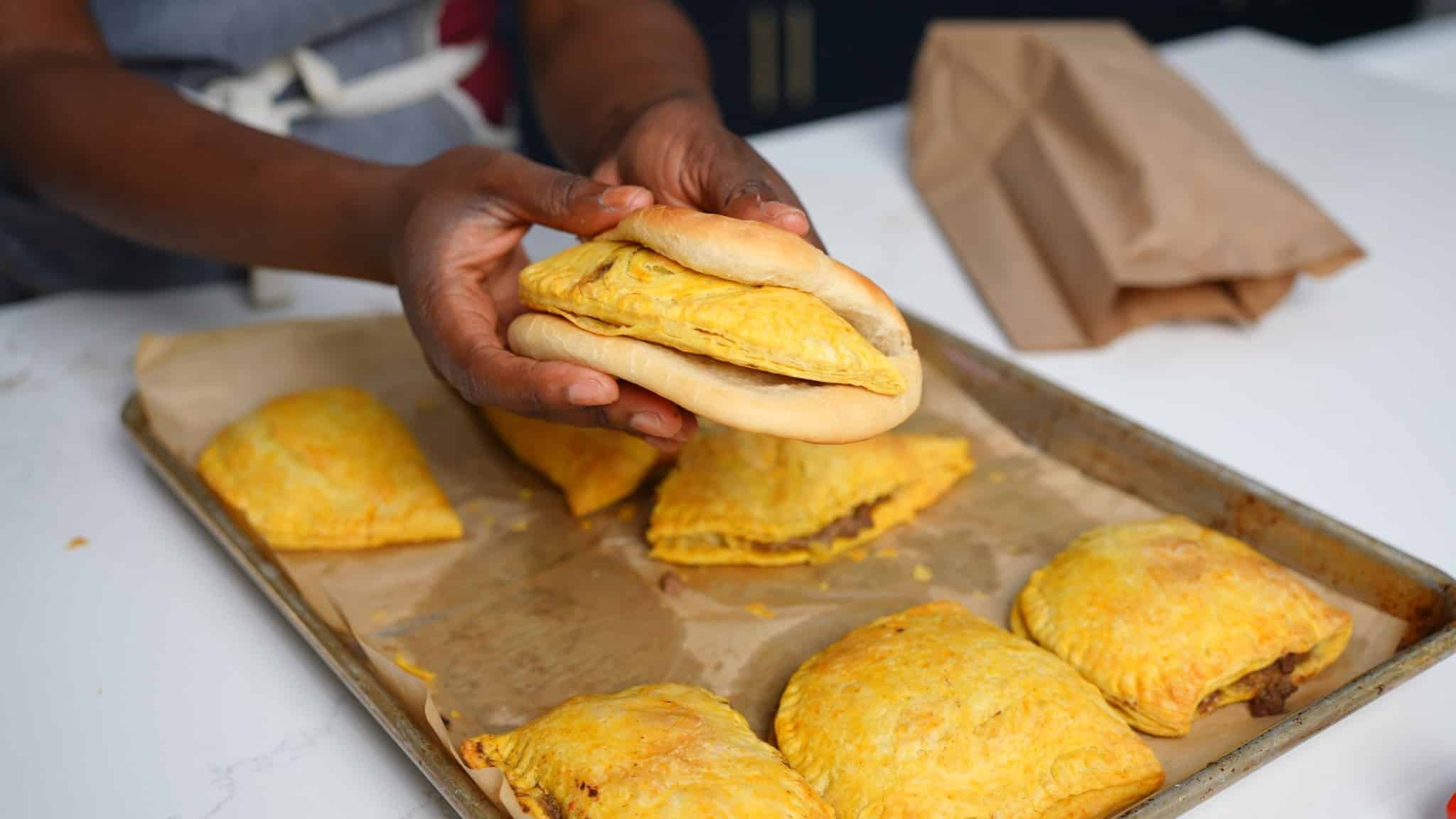
This Jamaican coco bread is soft, a little sweet, and folds open like a pocket, which makes it the classic partner for a hot beef patty.
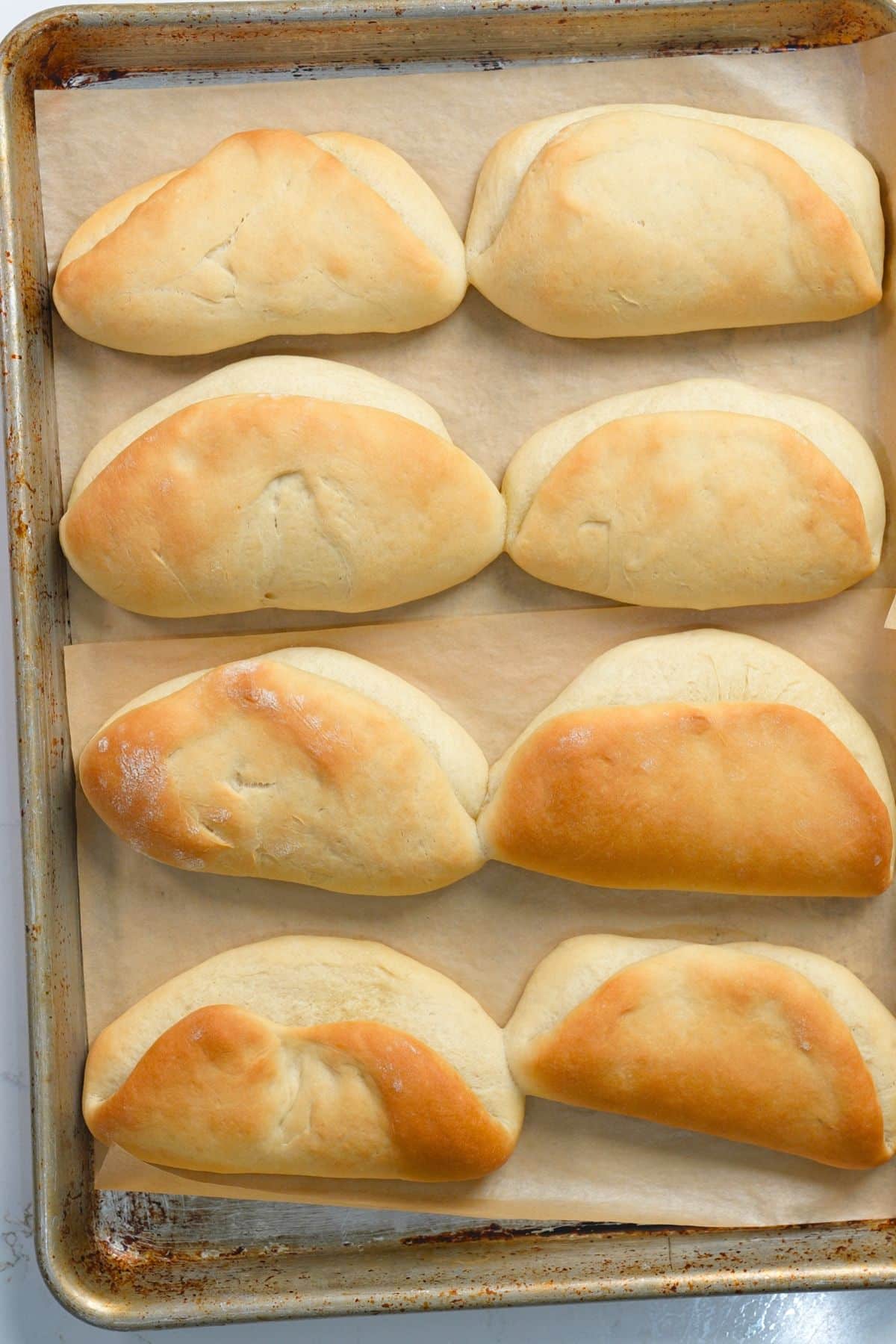
You’ll find the full recipe with ingredient amounts and instructions in the recipe card at the bottom of this post. Be sure to check out the blog post itself for extra tips and tricks!

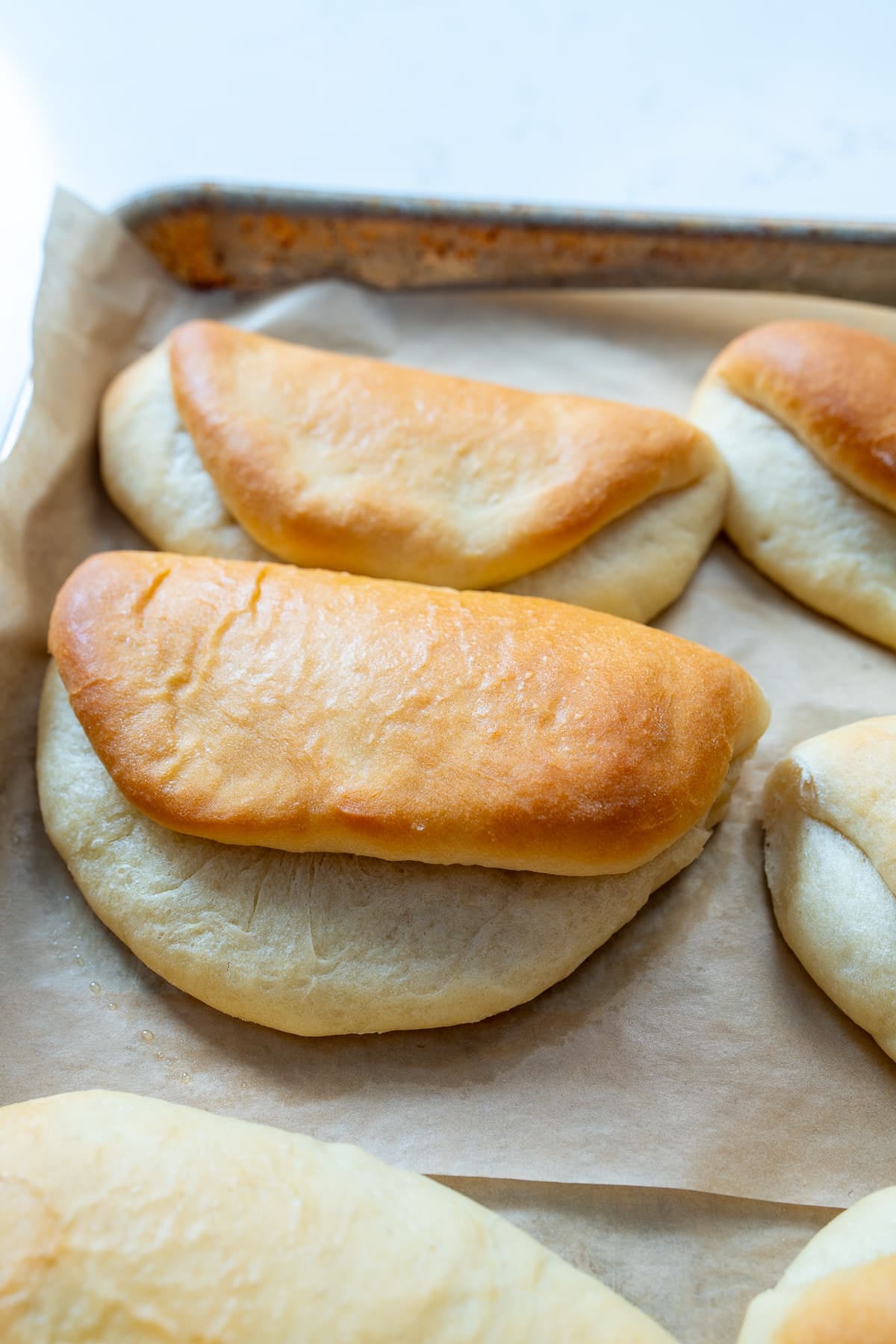
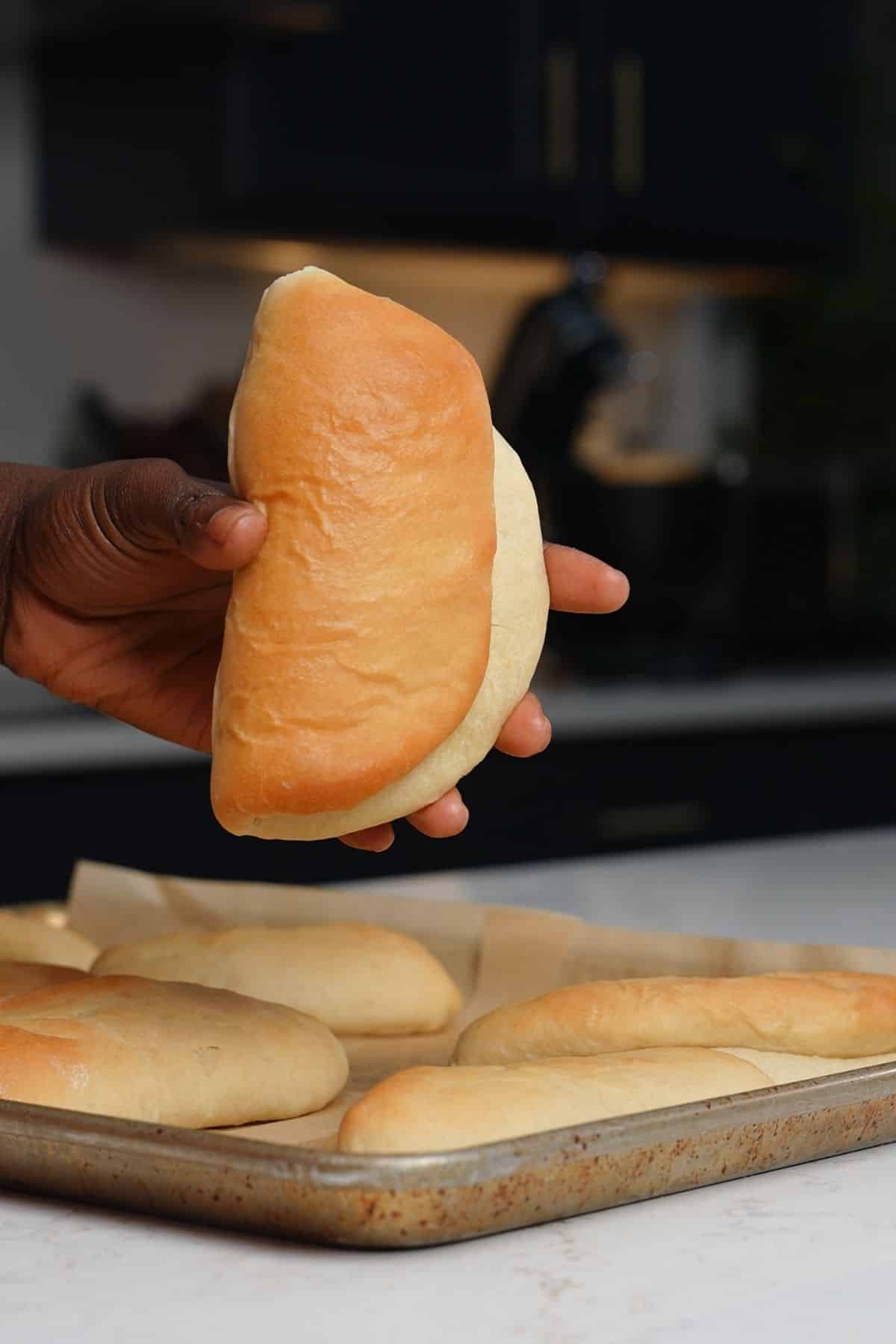
Growing up in a Jamaican household, a beef patty tucked into coco bread was one of my favorite bakery treats, and it’s a combo I still come back to in my own kitchen. Coco bread was never just bread on the side; it was the wrapper. You get a hot Jamaican beef patty, split the coco bread open while it’s still warm, tuck the patty inside, and press so the flaky crust meets the soft bread
My daughter loves this bread on its own. It's so soft and fluffy, it's like eating a cloud. It's the same dough I use for my Jamaican meatloaf, where instead of folding it empty, I wrap it around seasoned ground beef before baking. This coco bread is a recipe you'll for sure be making on repeat.
Happy Baking,
Tanya
What to Know about this Coco Bread
- Best for: wrapping beef patties. The dough also shapes into dinner rolls, or eat it warm on its own
- Prep time: about 20 to 25 minutes active (mixing, kneading, shaping)
- Rise time: 1 to 1.5 hours first rise, plus 30 minutes second rise
- Cook time: 17 to 20 minutes
- Total time: roughly 2 to 2.5 hours, most of it hands-off rise time
- Yield: 8 coco breads
- Good to know: shaped dough can be refrigerated overnight and baked the next day, and baked coco bread freezes well
Ingredient Notes
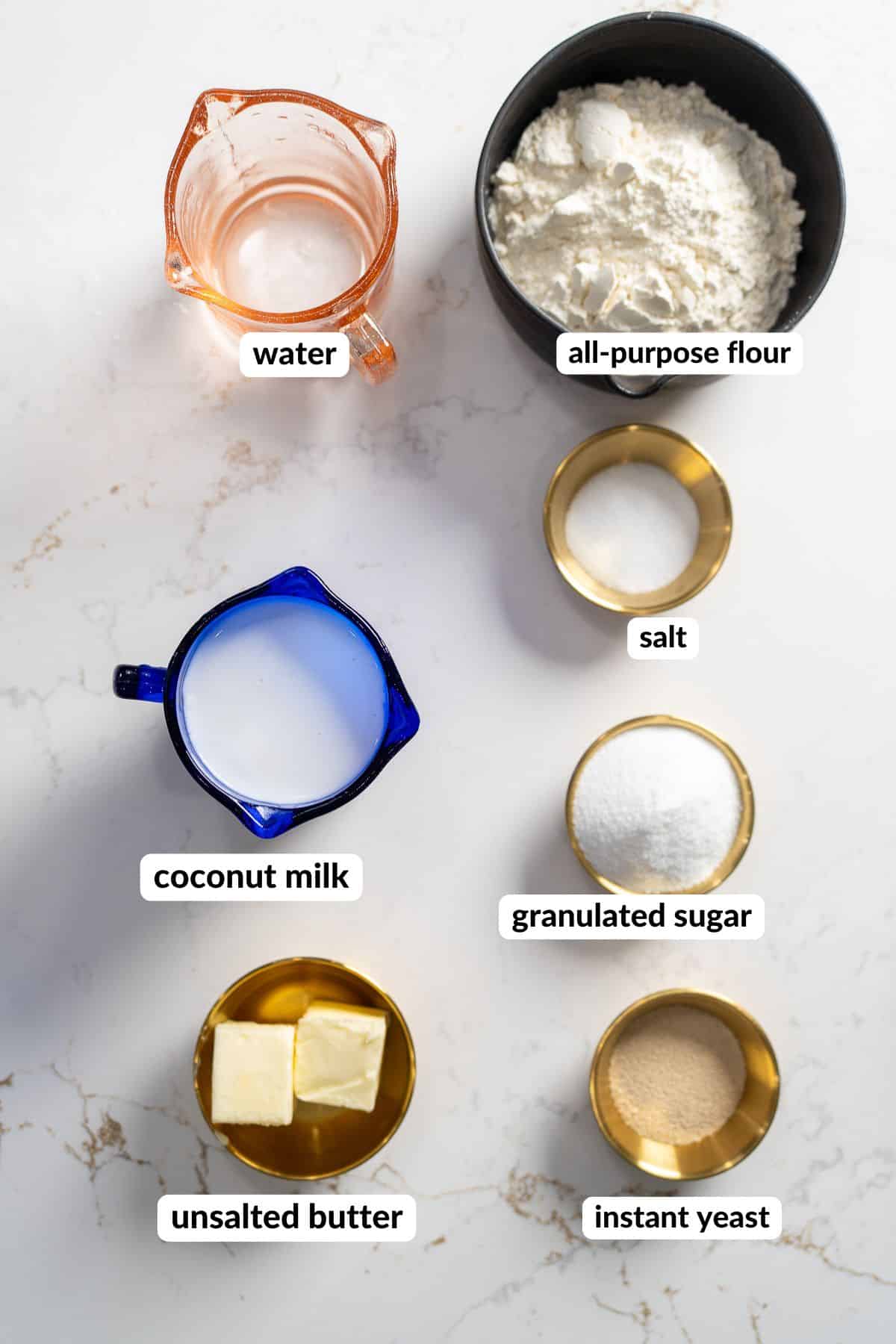
Ingredient amounts and full recipe instructions are on the printable recipe card at the bottom of the post.
- Warm water. You want it between 100°F and 110°F (38°C to 43°C). Any hotter and you risk destroying the yeast before it even gets going. If you don't have a thermometer, aim for water that feels like a warm bath, not hot to the touch.
- Instant dry yeast. This recipe uses 2¼ teaspoons, which is one standard packet. Instant yeast can go straight into the flour without blooming first. If all you have is active dry yeast, whisk it into the warm water used in this recipe and let it sit for 5-10 minutes, until it looks foamy, before mixing it into the flour. If it never foams, your yeast won't work and you'll want a fresh packet before going any further.
- All-purpose flour. I prefer using all-purpose flour for coco bread. If you want a slightly chewier, sturdier bread, you can swap in bread flour. You may need to adjust the amount of liquid used.
- Salt. I use table salt for this recipe.
- White granulated sugar. Sugar gives the coco bread its light sweetness, the kind that reminds people of Hawaiian rolls. It also helps the tops brown up in the oven.
- Unsweetened coconut milk. Use 1 cup of canned unsweetened coconut milk, and shake or stir the can well before measuring so the fat isn't separated out. This is where the "coco" in coco bread comes from, and it's what makes the crumb so tender. Skip the light or "lite" versions of coconut milk. You can sub coconut milk with whole milk, although you will lose that coco flavor.
- Unsalted butter. I use softened butter in this recipe. 2 Tablespoons go into the dough itself, and the rest is for brushing the dough before folding and again after baking. Don't skip that final brush, it's what gives coco bread its shiny, buttery top.
How to make Jamaican Coco Bread
Mix and Knead the Dough
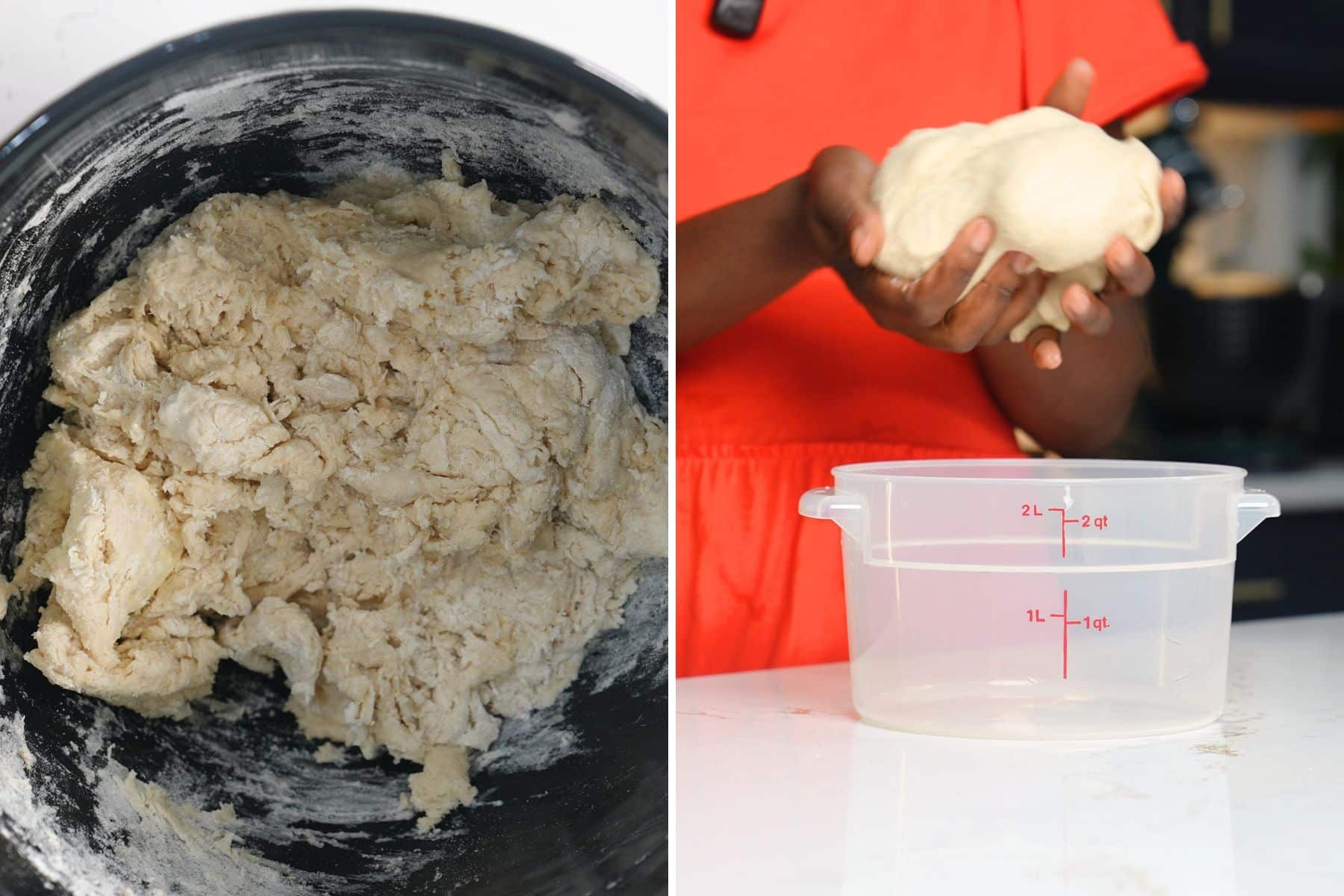
In the bowl of a stand mixer, or a large mixing bowl if you're doing this by hand, combine the flour, instant yeast, salt, and granulated sugar. Give it a quick stir so everything is evenly distributed before adding any liquid. Then add the warm water and coconut milk, and stir the mixture. Mix in the 2 tablespoons of unsalted softened butter. You should have a shaggy dough at this stage.
If you're using a stand mixer, mix until everything is incorporated, then switch to the dough hook and knead on low speed for 7 to 8 minutes. By hand, mix with a wooden spoon or spatula until a shaggy dough comes together, then turn it out onto a lightly floured surface and knead for 8 to 10 minutes.
Either way, you're looking for a dough that's smooth and still slightly sticky to the touch, not dry.
Let the Dough Rise
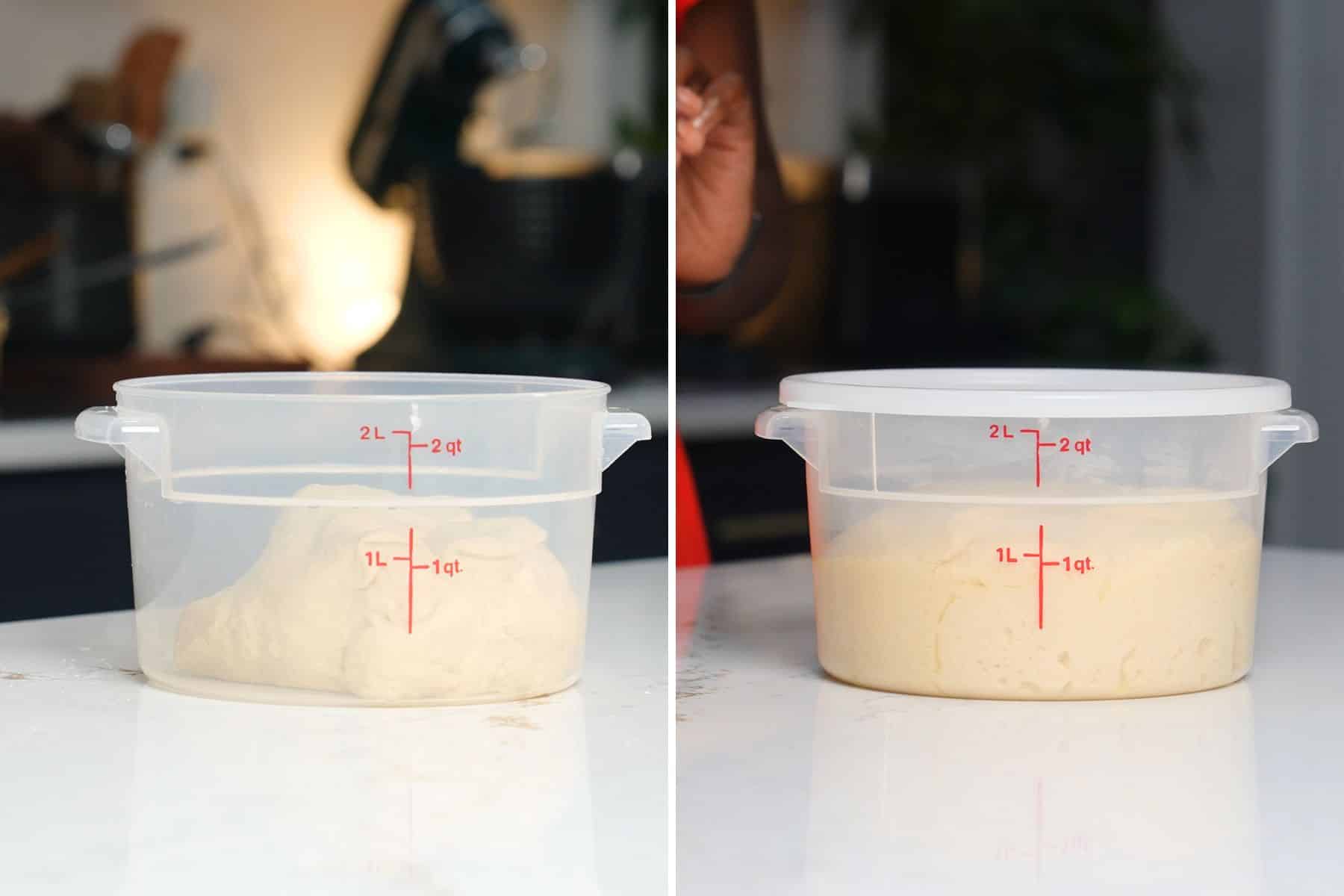
Shape the dough into a ball and set it in a greased bowl or container. Cover it and let it proof somewhere warm until it has nearly doubled in size, which usually takes 1 to 1.5 hours.
Divide the Dough
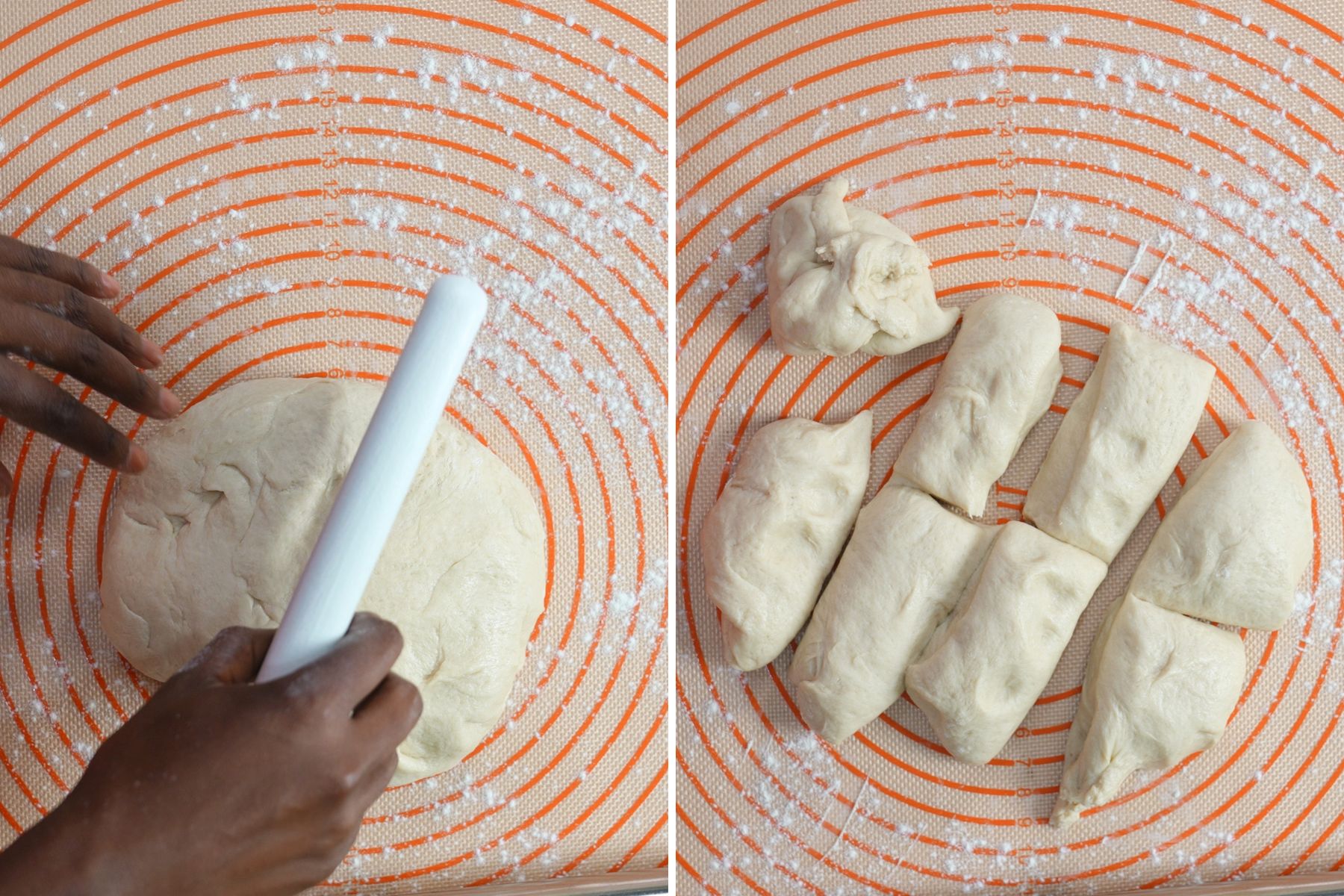
Turn the risen dough out onto a lightly floured surface and divide it into 8 equal pieces. They don't have to be exact, but the closer they are in size, the more evenly they'll bake.
Roll, Butter, and Fold
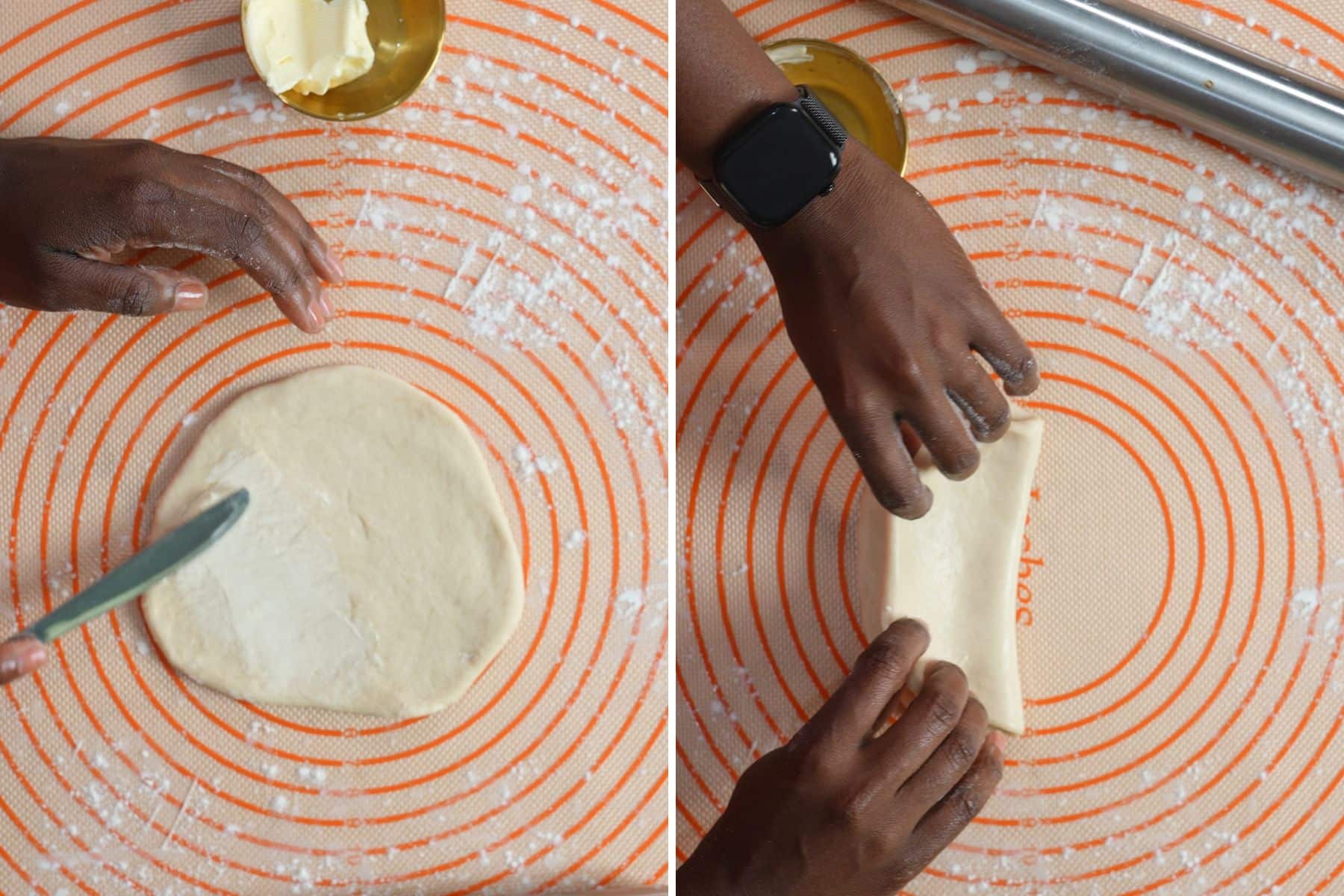
Roll each piece into a circle, about 6-inches. Spread the softened butter on one half of the dough, then fold it in half so it looks like a half moon.
That butter in the middle is important; it keeps the two layers from fully sealing together as they bake, which is what creates the pocket you'll later split open for a patty.
Second Rise
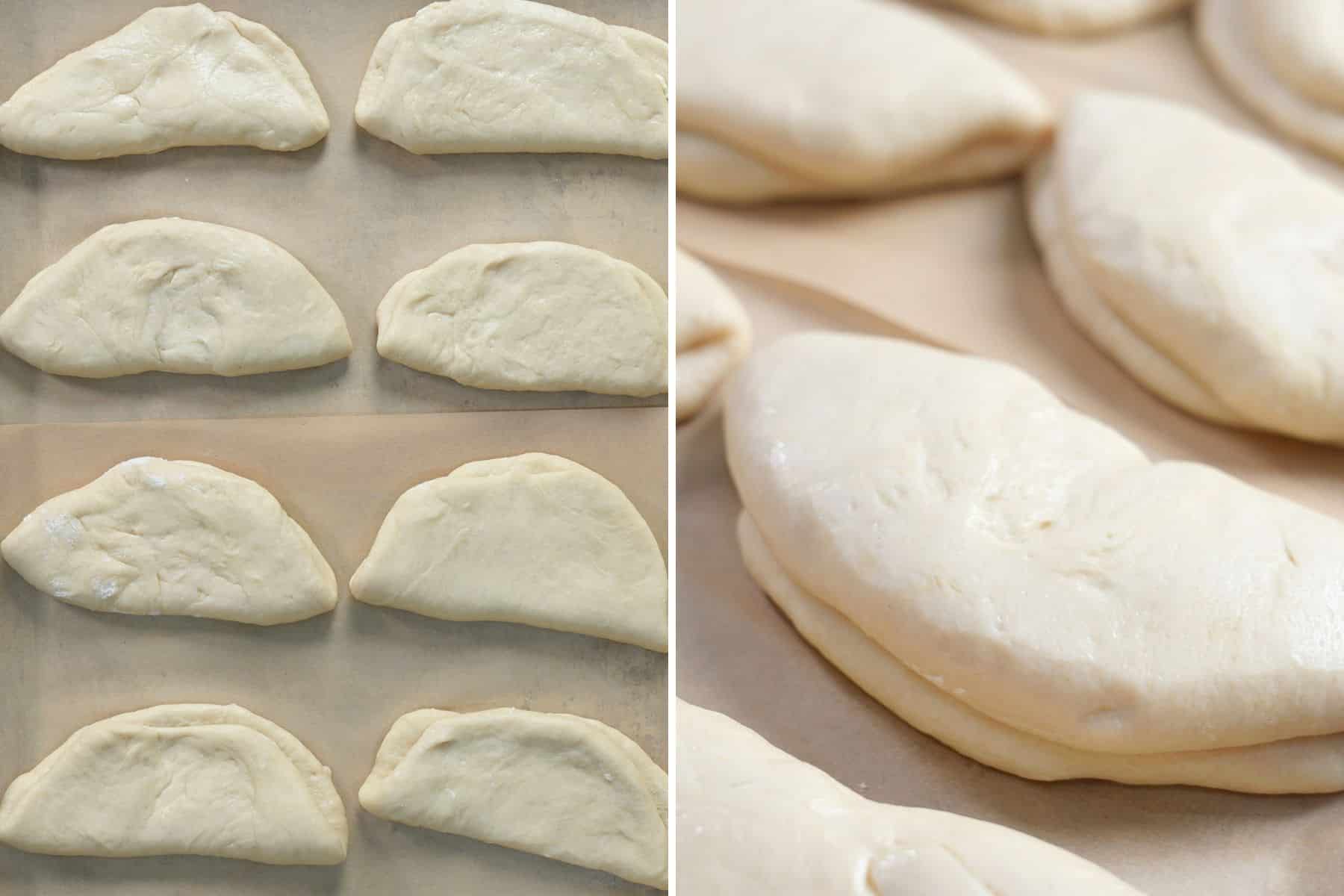
Place the folded pieces on a lined baking sheet as you go. A standard half sheet pan, will comfortably fit all 8 pieces with a little room between them to expand.
Cover the shaped pieces and let them rise for another 30 to 40 minutes. They won't puff up dramatically like the first rise, but they should look slightly softer and puffier than when you first folded them.
Bake and Brush with Butter
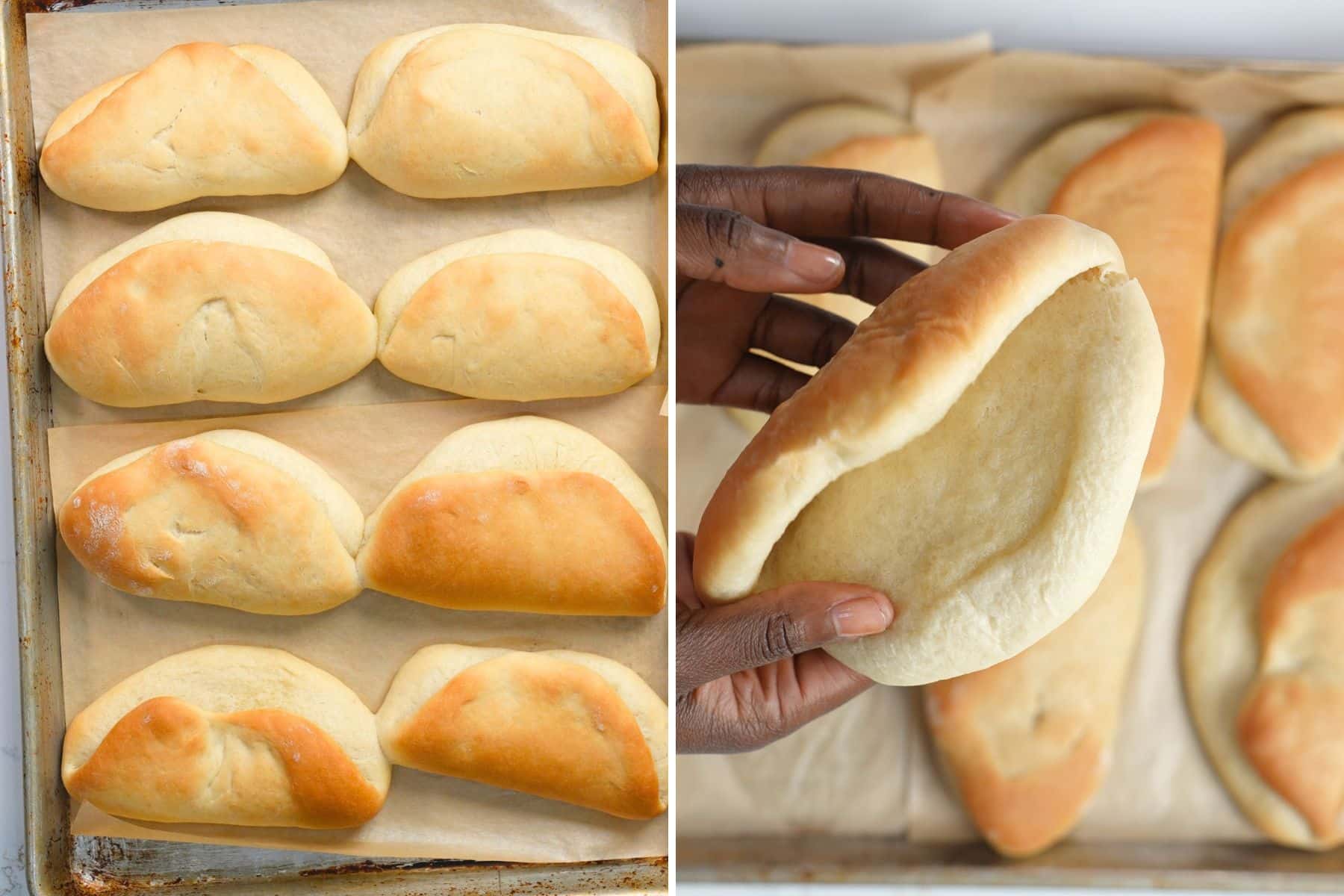
While the dough has its second rise, preheat your oven to 350°F (175°C). Bake for 17-20 minutes, until the tops are golden. Every oven runs a little differently, so start checking at the 15-minute mark. As soon as they come out of the oven, brush the coco bread all over with the remaining butter. This is what gives them that soft, glossy top, and it soaks in best while they're still hot.
Tanya's Top Tips
- Keep the dough slightly sticky while kneading. The dough should be sticky, but not stick onto your fingers.
- Depending on how thick your coconut milk is, you may need more or less flour. If you find your dough too wet, add a little flour a tablespoon at a time.
- Spread butter generously, both in the center before folding and on top after baking. I make sure my butter is very softened, making it easier to spread.
- Let coco bread cool for a few minutes before splitting it open for a patty. Straight out of the oven, it can tear instead of opening into a clean pocket.
Variations
Since this bread is usually headed toward a beef patty anyway, try stirring a little chopped scallion, fresh thyme, and a pinch of allspice into the butter you brush on after baking. It adds a savory Caribbean note without changing the dough itself.
This dough shapes into more than the folded pocket. Roll it into balls and bake them as soft dinner rolls when you want a side for the table instead of a sandwich pocket.
Storage, Reheating, and Freezing
Let coco bread cool completely before storing. At room temperature in an airtight container or bag, it keeps for 2 to 3 days.
Keep baked Jamaican coco bread in an airtight container in the fridge for up to 3 days. Let them cool completely before covering, so excess steam doesn’t make the bread soggy. To reheat, wrap the bread loosely in foil and warm it in a 325°F to 350°F (160°C to 175°C) oven for about 7 to 10 minutes, until soft and warmed through. A toaster oven or air fryer works too, just use a shorter time and keep the foil on so the tops don't over brown. You can also microwave in 10 to 20 second bursts with a damp paper towel over the bread, though microwaved bread can turn a little tough once it cools, so the oven is the better bet when you have the time.
To freeze coco bread, cool the baked coco bread completely, then place the pieces on a baking sheet and freeze just until firm, 1 to 2 hours. Wrap each one tightly in plastic wrap or foil, then place in a freezer bag or airtight container and freeze for up to 2 to 3 months. Reheat straight from frozen on a baking sheet in a 350°F (175°C) oven until hot warm, about 8-10 minutes.
FAQs
Yes, you can substitute the same amount of whole milk if that's what you have. The bread will still be soft, but you'll lose the coconut aroma and subtle sweetness that gives coco bread its name.
Yes. Shape the coco bread, place it on a lined tray, cover tightly, and refrigerate overnight instead of doing the second rise right away. The next day, let the pieces come to room temperature before baking as directed.
Anything with a bit of sauce or substance works: jerk chicken, brown stew chicken, callaloo for a vegetarian option, fried fish, or just butter and jam for breakfast. And nothing at all is a valid answer too, that's how my daughter prefers hers.
Jamaican Coco Bread Recipe
Video
Ingredients
Instructions
- In the bowl of a stand mixer, or in a large mixing bowl if making by hand, combine the flour, instant yeast, salt, and sugar.
- Add the warm water and coconut milk, and stir the mixture. Mix in the 2 tablespoons of unsalted softened butter. You should have a shaggy dough at this stage.
- For a stand mixer: Mix until incorporated, then switch to the dough hook and knead on low speed for 7 to 8 minutes. By hand: Mix with a wooden spoon or spatula until a shaggy dough forms, then knead on a lightly floured surface for 8 to 10 minutes; the dough should be slightly sticky.
- Shape the dough into a ball and place it in a greased bowl. Cover and let it proof in a warm spot until it has nearly doubled in size, 1 to 1 ½ hours.
- Turn the dough out onto a lightly floured surface and divide it into 8 equal pieces. Roll each piece into a circle, about 6-inches. Spread some of the remaining softened butter on one half of the dough, then fold it in half so it looks like a half moon.
- Place the pieces on a lined baking sheet, cover, and let rise for 30-40 minutes.
- Meanwhile, preheat the oven to 350°F (175°C). Bake for 17-20 minutes, until the tops are golden.
- Remove from the oven and brush the coco bread with the remaining butter.
Nutrition
Notes
- Sub whole milk for the coconut milk if needed, but you'll lose the coco flavor.
- Dough can be shaped, covered, and refrigerated overnight. Bring to room temperature before baking.
- Store airtight at room temperature for 2 to 3 days, or freeze wrapped for up to 3 months. Reheat frozen at 350°F (175°C) for 8 to 10 minutes.
Jannay says
This worked exactly as written, thanks!
Tanya Harris says
Thanks so much for the feedback Jannay! So glad the recipe worked well for you 🙂
Sherri Parker says
Thank you so much for your recipe, I am a baker but I can not make a biscuit to save my life and my old school husband loves bread on a Saturday and Sunday for breakfast and basically for every meal. I made these and let me tell you I am on week six making these. We are headed to Italy this week and guess what he wants to make sure we have- yes Coco Bread- have them in the oven as we speak. I brought some to work and now have them hooked on your recipe as well. Followed the recipe as written and they come out perfect every single time. Wish I can send you a picture. They look so good.
Tanya Harris says
Thank you so much, Sherri! That makes me so happy. So happy this coco bread is a repeat recipe for you! It's one of my favorite bread recipes to make.
Catherine Ursini says
Not yet a comment, as I will ne trying this recipe for the very first time in a week or so. My question is this: You said they can be filled, but will this change the cook time; and if so, by how much?
Tanya Harris says
Hi Catherine, yes, they can be filled. I do this with my Jamaican meatloaf recipe, which is stuffed with a ground beef filling. The cook time should stay about the same as long as the filling is already cooked. I usually bake them for about 18–20 minutes at the same temperature. Just make sure the dough is golden and reaches at least 190°F, and that the filling is heated through to 165°F.