
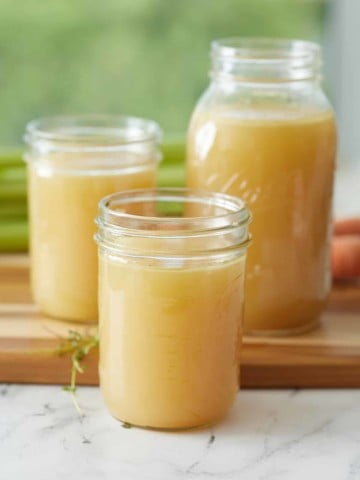
This homemade vegetable broth is rich, deeply flavorful, and made entirely from simple vegetables and aromatics you likely already have on hand. Once you start making your own, you’ll want to keep a batch in the freezer at all times.
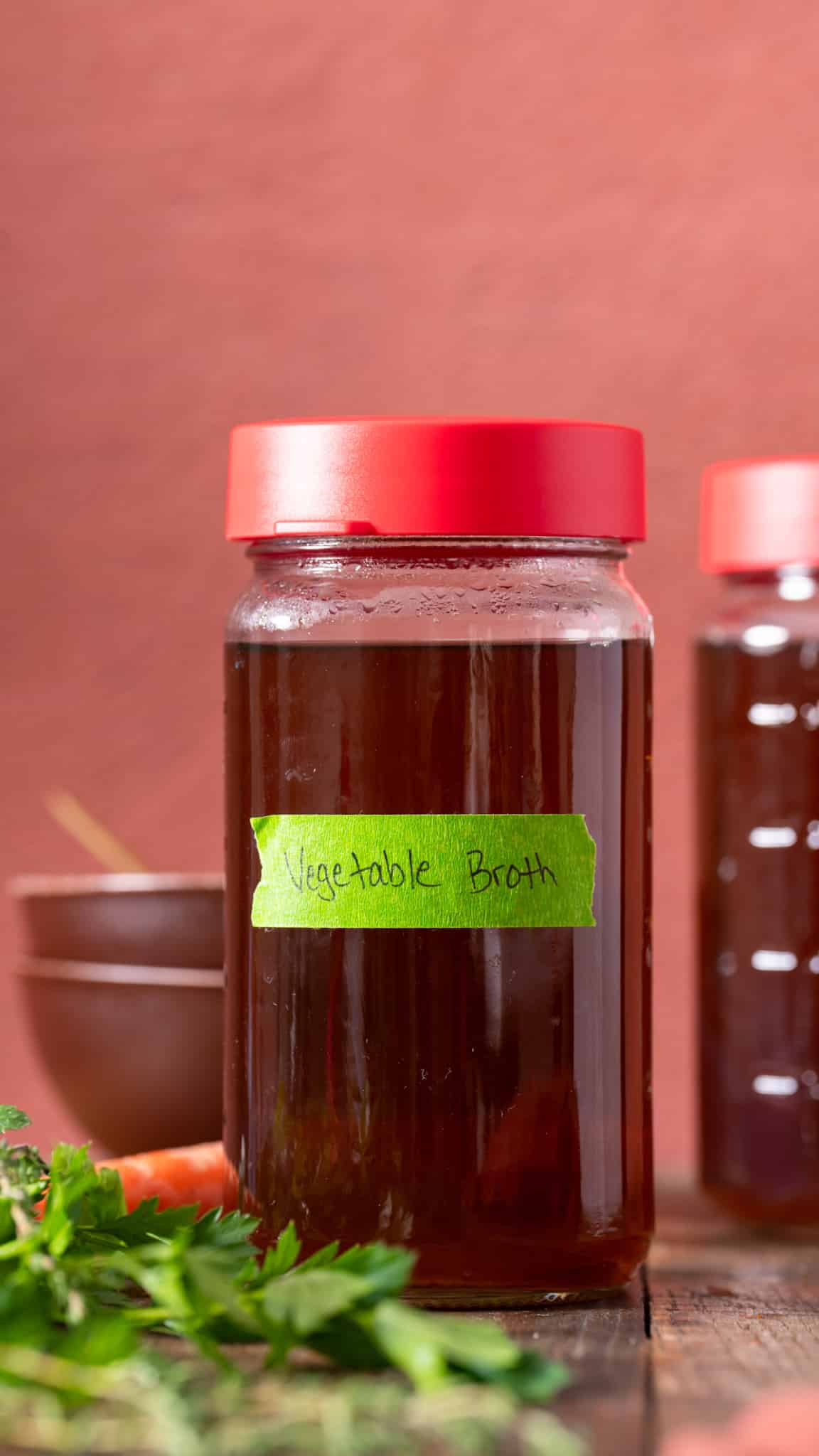
You’ll find the full recipe with ingredient amounts and instructions in the recipe card at the bottom of this post. Be sure to check out the blog post itself for extra tips and tricks!
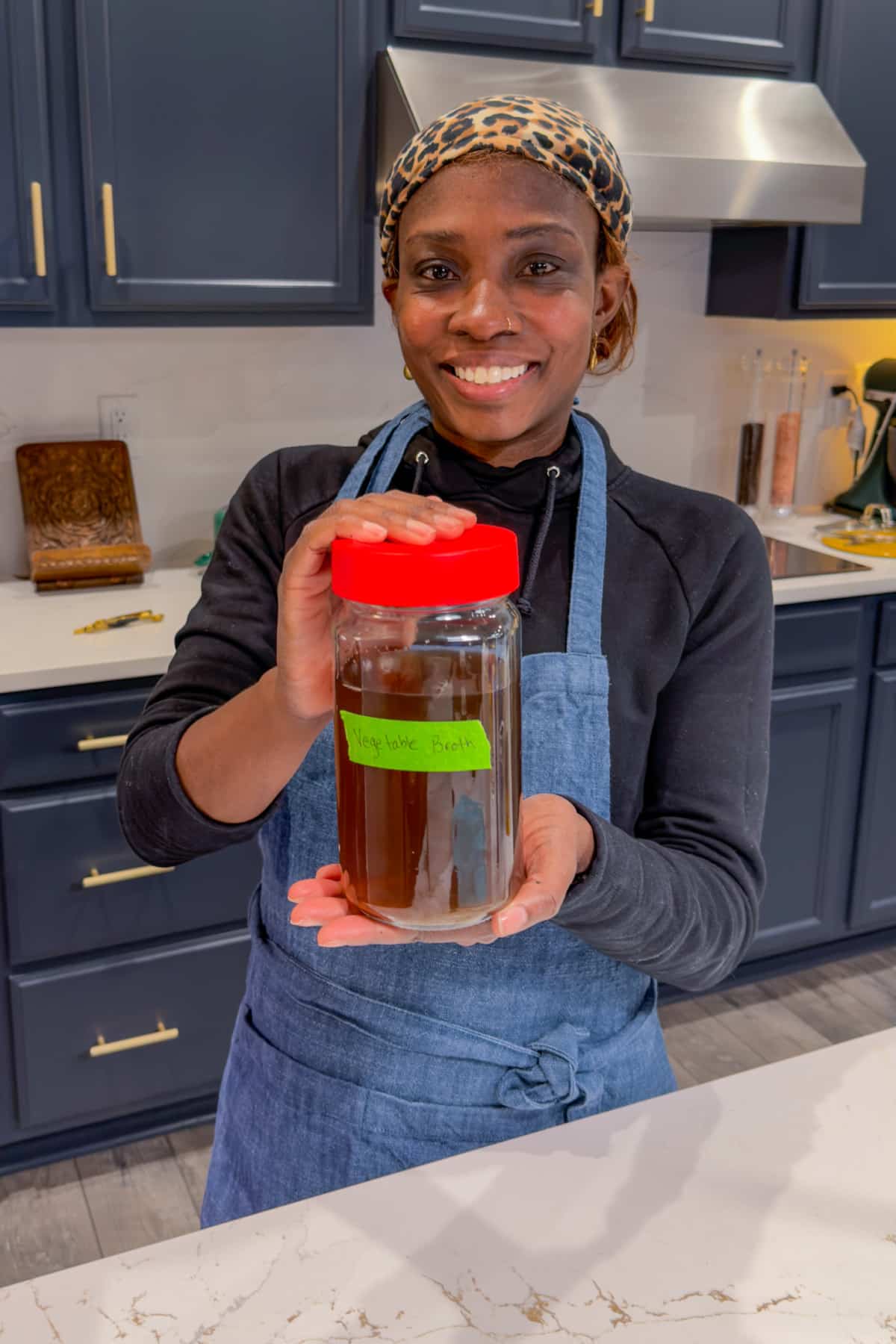
I find that so many dishes have a base of broth or stock. There's this Slow Cooker Chicken Broth that I love to stash in the freezer, but one broth I keep coming back to is vegetable broth. It’s made with ingredients you likely already have rolling around in your fridge, like onions, carrots, and celery, and the flavor it produces is really good.
This is something I like to make ahead and keep on hand. I use it in rice dishes, soups, stews, and anywhere that needs a little extra boost of flavor. It’s a simple swap that makes a big difference. If you’ve never made your own broth before, I promise this recipe will make you a convert.
Love, Tanya
Vegetable Broth at a Glance
- Prep Time: 15 minutes
- Cook Time: 1 to 1½ hours
- Total Time: About 1 hour 45 minutes
- Makes: About 8 cups of broth
- Best For: Meal prep, soups, rice dishes, stews, anywhere that calls for broth
A Quick Look at the Ingredients
Ingredient amounts and full recipe instructions are on the printable recipe card at the bottom of the post.
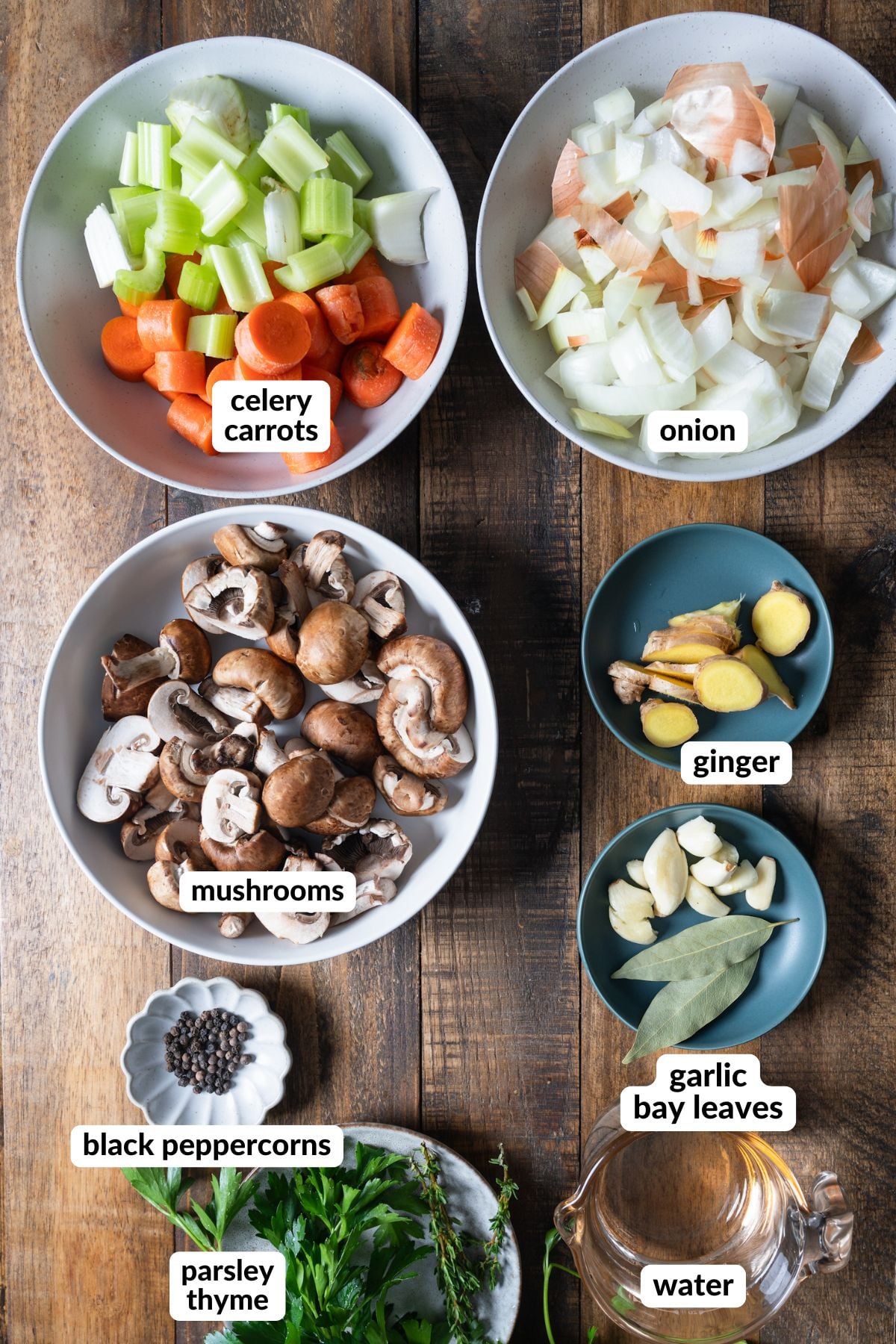
- Carrots, Celery, and Onion form the classic flavor base for this broth. No need to peel the carrots, just scrub and chop. Leave the skin on the onion for a beautiful golden color. Use the whole celery stalk, including the leafy tops.
- Garlic is smashed with the flat side of a knife. No need to peel it.
- Baby Portabella Mushrooms add a savory, umami-rich flavor to the broth, making it taste more complex. Cut them in half before adding.
- Fresh Ginger is sliced into coins and added. I love ginger and add it to my broth whenever I get a chance. If you don’t have it on hand, you can skip it, but I love what it brings.
- Black Peppercorns, Bay Leaves, Fresh Parsley, and Fresh Thyme are your aromatics. Together, they build that classic, herbaceous broth flavor. Dried parsley and thyme work fine as substitutes.
- Cold Water helps draw out the flavor from the vegetables slowly as it comes up to heat.
- Salt to taste at the end. I usually add about 1 teaspoon of fine sea salt, but taste and adjust to your preference.
How to Make Homemade Vegetable Broth
Step 1: Prep your vegetables by rinsing them and cutting them into smaller pieces. I aim to cut the carrots, onions, and celery into ½ inch cubes. The smaller the pieces are, the quicker they will release flavor.
Step 2: Combine everything in the pot by adding all of the vegetables, herbs, peppercorns, and bay leaves to a large pot (at least 4 quarts). Pour in the cold water. It should just cover the vegetables.
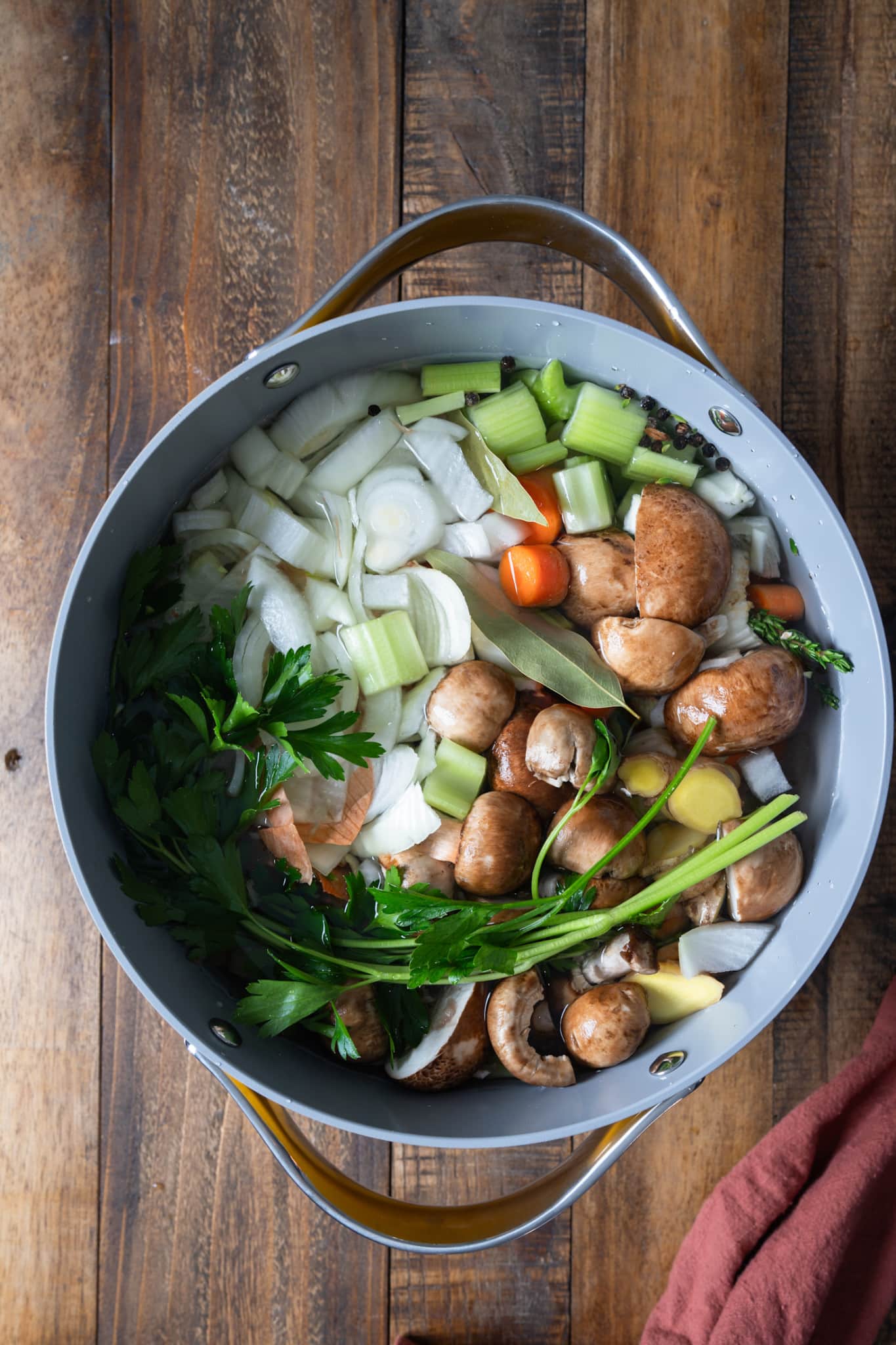
Step 3: Bring to a boil over high heat, then immediately lower the heat to medium-low to simmer. You want a gentle simmer, just a few bubbles breaking the surface, not a rapid boil. Leave the pot uncovered and simmer for 1 to 1½ hours.
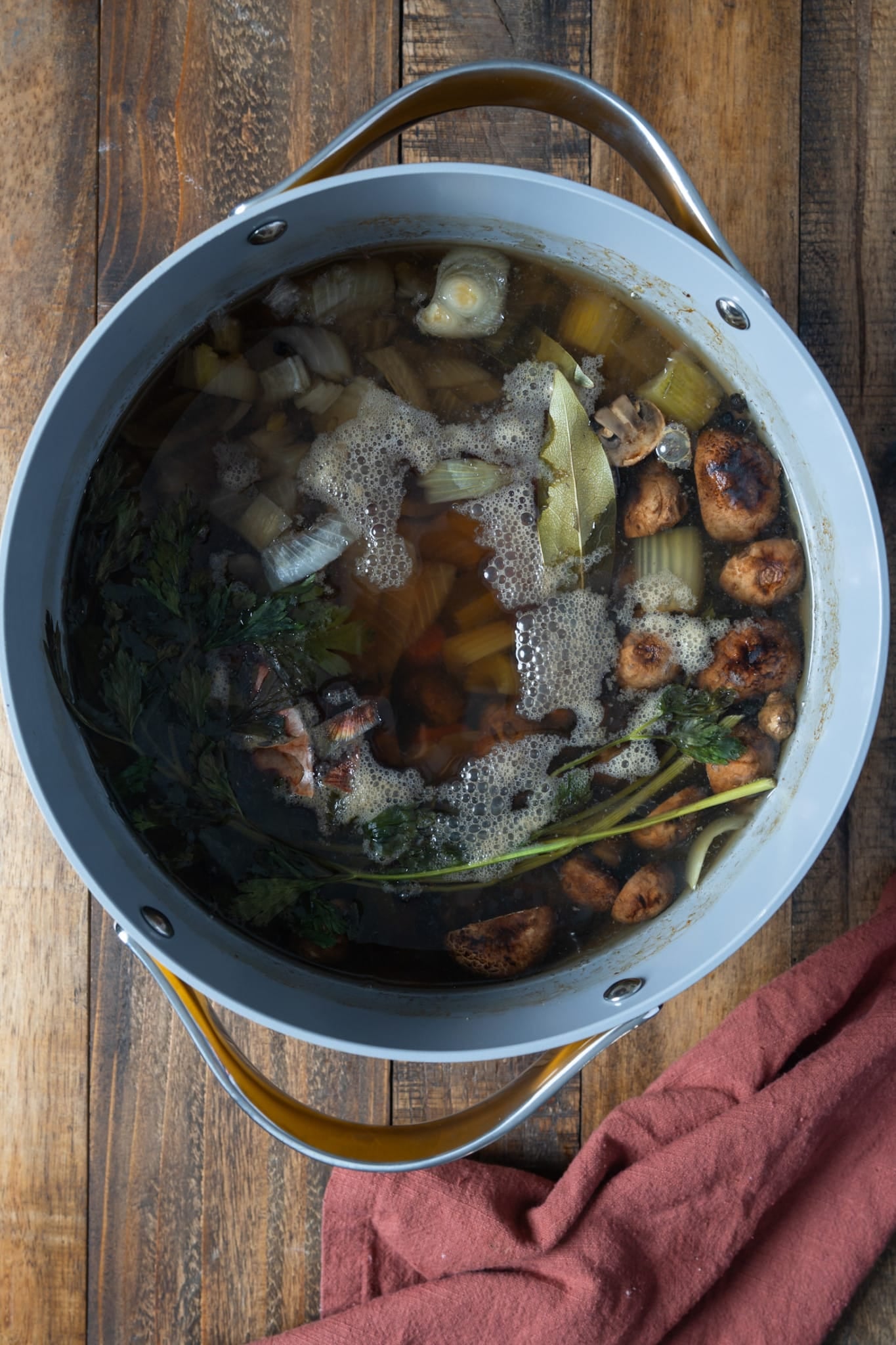
Step 4: Check your broth for doneness by tasting. I like to taste one of the cooked vegetables in the broth. If it tastes bland, the flavor has transferred into the liquid, and you’re ready to strain. Place a fine-mesh strainer over a large bowl. Carefully pour the broth through, then gently press the vegetables with the back of a spoon to squeeze out any extra liquid. Discard or compost the solids.
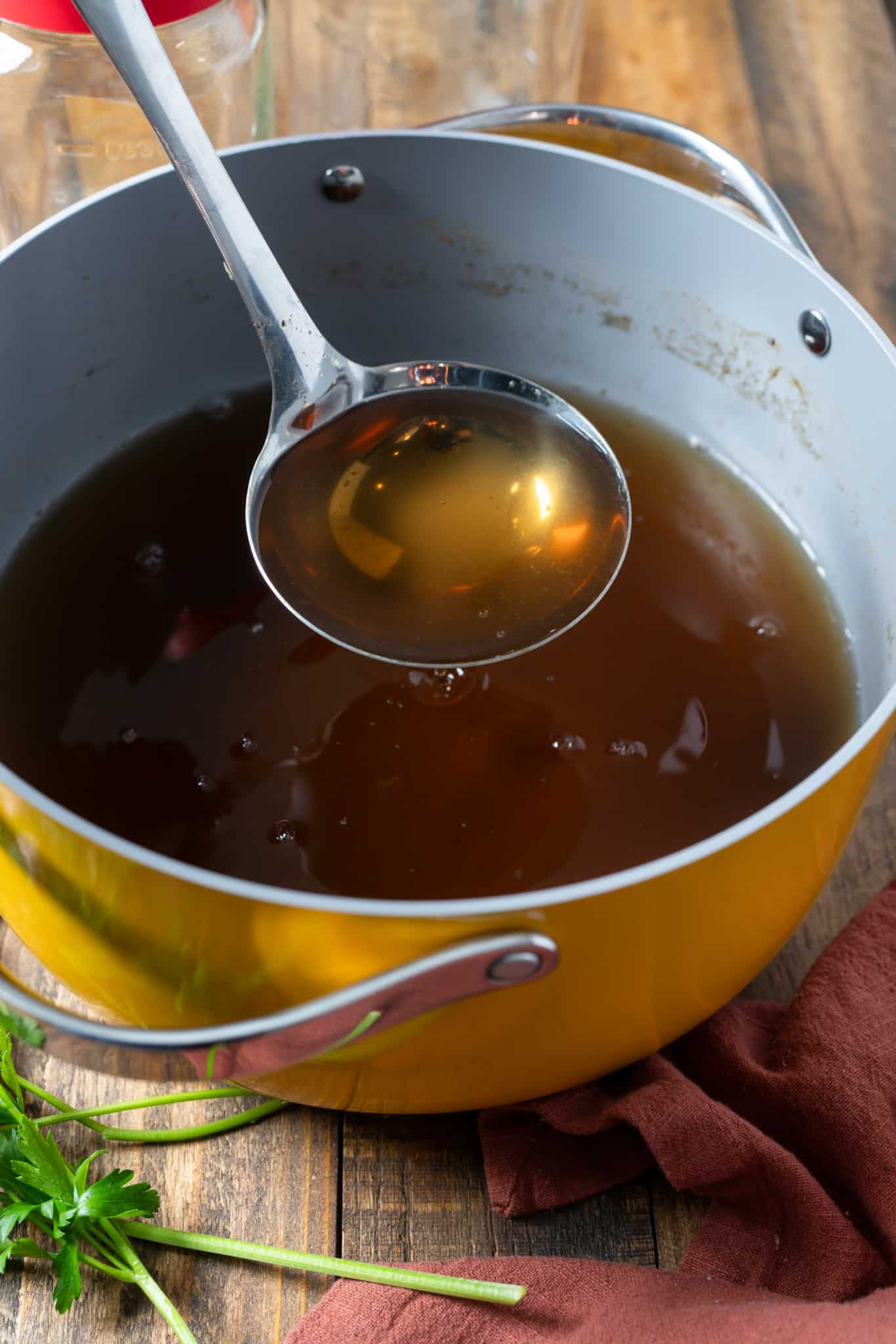
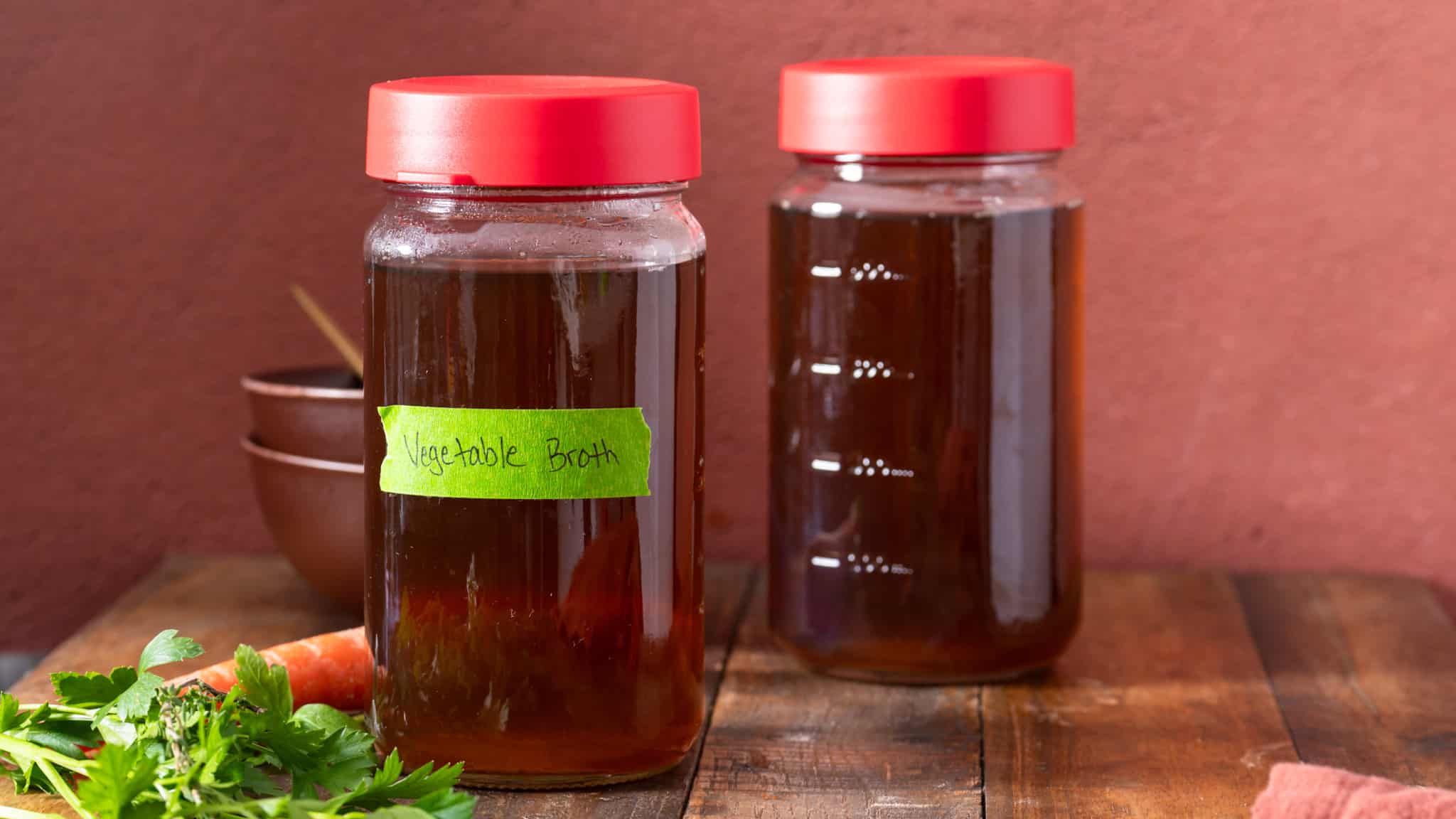
Step 5: Season and Store by letting the broth cool to room temperature for about 10 minutes, then transferring it to airtight containers. Salt to taste. I usually add about 1 teaspoon of fine sea salt.
What Are the Best Vegetables for Broth?
One of the best things about making vegetable broth at home is its flexibility. The foundation is always carrots, celery, and onion, but you can add leeks for a milder sweetness, mushrooms for depth, or a spoonful of tomato paste for a little richness and color. Fresh herb stems and garlic round everything out. If you cook regularly, you probably already have most of this on hand.
Vegetables to Avoid
Some vegetables can make your broth bitter or produce off-flavors. It’s best to skip:
- Brassicas like broccoli, cauliflower, Brussels sprouts, and cabbage. They turn bitter and can give the broth a sulfurous smell.
- Beets. They will turn your broth bright red or purple and can overpower everything else.
- Starchy vegetables like potatoes. They make the broth cloudy and starchy rather than clear and clean.
Vegetable scraps are a great way to build flavor over time. Save carrot peels, onion skins, celery tops, and parsley stems in a zip-lock bag in the freezer, and when you’ve got enough, make a batch of broth.
How to Use Vegetable Broth
This broth is so versatile. Here are some of my favorite ways to use it:
- Use it in place of water when cooking rice. Try it in my Easy Yellow Rice Recipe or Oven Baked Rice for a huge flavor upgrade.
- Use it as the base for soups like my Black Bean Soup, Collard Green Soup, or Creamy Broccoli Cheddar Soup.
- Stir it into beans while cooking for extra flavor. It’s great in my Pinto Beans Recipe or Red Beans and Rice.
- Use it in stews and braises, like my Stovetop Beef Stew or Hearty Instant Pot Vegetable Soup.
Make Ahead and Storage
- Storage: Once cooled, transfer the broth to airtight containers and refrigerate for up to 5 days.
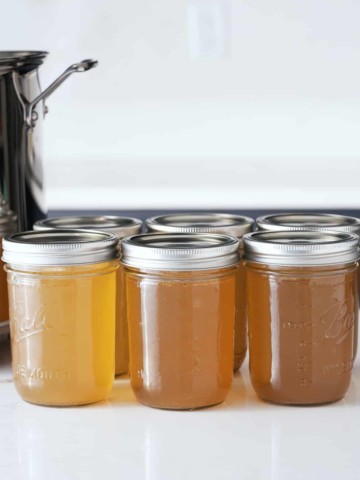
- Freezing: Pour into freezer bags, mason jars (leave headspace), or ice cube trays for easy portioned use. Freeze for up to 3 months. The ice cube method is great when you just need a small amount to deglaze a pan or add to rice.
- Reheating: Thaw overnight in the refrigerator or warm directly from frozen in a small saucepan over low heat.
Tanya’s Top Tips
- Salt at the end, not the beginning. The broth reduces as it simmers, so salting at the end gives you better control over the final seasoning.
- Taste a vegetable to know when it’s done. When the carrot or celery tastes like nothing, the flavor is in the liquid. That’s your green light to strain.
- Freeze in portions. I love using a silicone ice cube tray to freeze broth in small amounts so I always have a little bit on hand without defrosting a whole batch.
Related Recipes
I hope you love this homemade vegetable broth as much as we do. If you’re looking for more broth or stock recipes, try these out:
- Slow Cooker Chicken Broth is my go-to chicken broth recipe, and I make it and freeze it for whenever I need it.
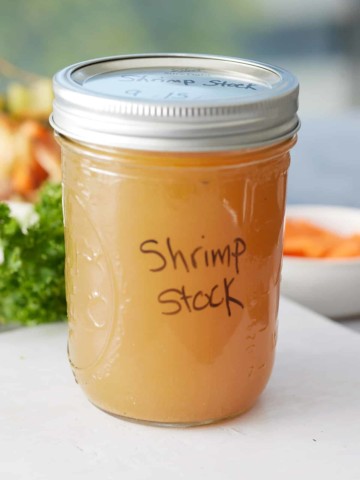
- Shrimp stock is another flavorful option that works well in soups, stews, and seafood-based dishes.
Homemade Vegetable Broth
Ingredients
Instructions
- Add all of the vegetables, herbs, peppercorns, and bay leaves to a large pot (at least 4 quarts). Pour in the cold water. It should just cover the vegetables.
- Bring to a boil. Place the pot over high heat and bring to a boil. Reduce the heat to medium-low and simmer uncovered for 1 to 1½ hours. You want a gentle simmer, not a rapid boil.
- Set a fine-mesh strainer over a large bowl. Pour the broth through, pressing gently on the vegetables to squeeze out the last of the liquid. Discard the solids.
- Salt to taste (about 1 teaspoon fine sea salt). Let cool to room temperature before transferring to airtight containers.
Nutrition
Notes
- Makes about 8 cups of broth, depending on evaporation during simmering.
- To check for doneness, taste one of the cooked vegetables. If it tastes bland, the flavor has transferred to the water, and you’re ready to strain.
Leave a Reply